SRI THILLAI NATARAJA TEMPLE,
CHIDAMBARAM,
CUDDALORE DISTRICT,
TAMIL NADU, INDIA
அருள்மிகு
உமாயாம்பிகை சமேத தில்லை நடராஜப்பெருமான் திருக்கோயில்,
சிதம்பரம், கடலூர் மாவட்டம், தமிழ் நாடு
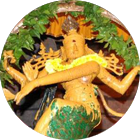
"The Lord of Dance -
Sri Nataraja dances in a blissful state and this dance is called
"Ananda Taandava, Lord Shiva danced to fulfill the wishes of Sri Patanjali Muni
and
Sri Vyagrapatha Rishi "
Arulmigu Thillai Nataraja
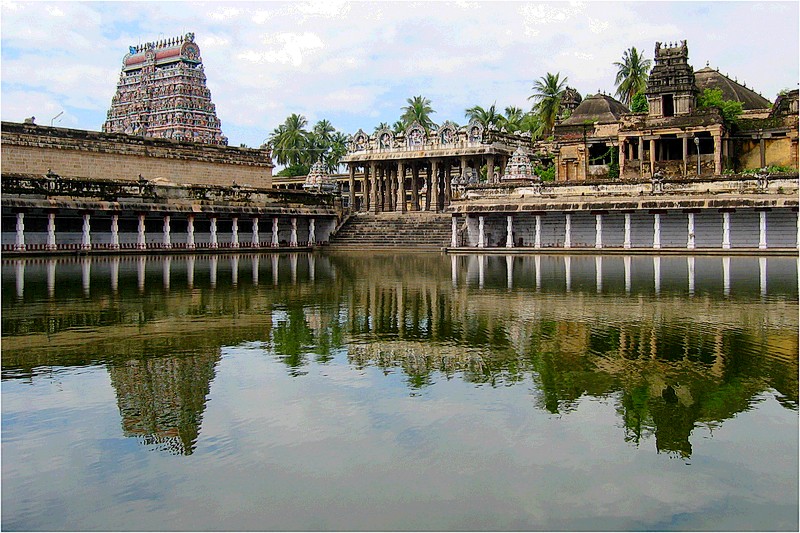
temple is spread over 51 acres of land, with huge five tier Gopuram
and temple tanks, 1000 pillar mandapam, praharas.
The word Chidambaram comes from words
'Chith' and 'Ambaram', which literally means the sky infused with an
atomosphere of intelligence and wisdom.
This temple houses a Crystal Lingam (spatika),
indicating the GOD is in both Roopam (Nataraja) and Aroopam
(Lingam).
There were 3000 priests brought by Sri
Patanjali Rishi to perform daily rituals for the Lord. It is
said actually it is only 2999 and the remaining one is Lord Shiva
Himself, that is one of the reasons Dikshithars run their family
expenses from the temple income, which, as otherwise, considered a
sin by other Shaivism temples. They consider the Lord as their
family member.
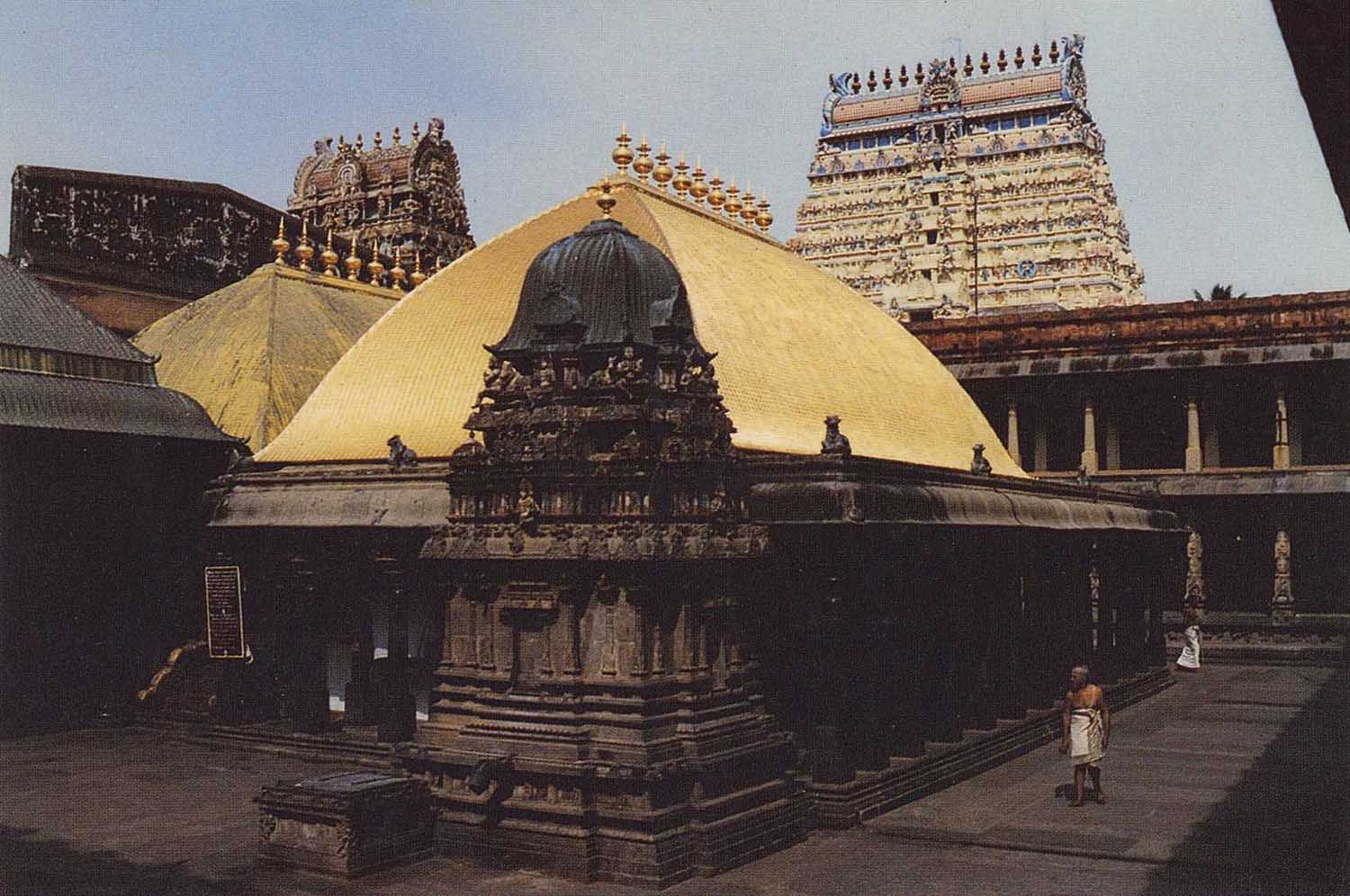
Paranthaka Chola II and
Uthama Chola erected the Golden Shield Roof for Sri Nataraja 1200
years ago and made a rule that no one, even the Priests
of the temple should ascend the roof.
'Thillai' trees a species of
mangrove trees - serves as a sthala vruksha of this temple
(it grows near Chidambaram in Pichavaram wetlands). The temple
sculptures depicting the Thillai trees date back to 2nd century AD.
Vyagrapatha Maharshi (Vyagra
- Tiger, Patha - Foot), did penance and performed Poojas to the Lord
here.
Dikshitars -
one the oldest clan hierarchy of Priests - control the temple
administration and do rituals in the shrine based on Vedic Agamas.
Sri Nandanar - who was among the 63
Sservitors of Lord Shiva - entered into Agnikundam and reached the
Abode of Lord.
Sri Nataraja dances lifting His left
foot, while in Madurai He lifted His right foot to Pandya King.
"Akaya sthal" - Among the
panchabhootha sthal, this one is "Space".
Legends say that Lord Shiva displayed
His Dance of Bliss (the 'Ananda Thaandavam) - as Nataraja to
Vyagrapatha and Patanjali on the day of Pushya (Poosam in Tamil)
star in the month of 'Thai' (Jan-Feb).
This
is where the holy hymns of the famous Saints "Thevaram" was
unearthed from the underground chamber - about 1000 years ago.
Sri Manickavachagar Prayed to Lord
Nataraja and at His Grace, Sri Lankan King's dumb daughter
spoke.
There are five Ambalams or Sabhas
inside the temple namely, Chithsabha, Golden Sabha, Big Sabha, Dance
Sabha, Raja Sabha. However, one can worship both Lord Nataraja
(Shiva) and Vishnu standing at one point.
It is said that famous Four Saints,
Appar, Sundarar, Manickavasagar, Thirugyanasampandar visited the
shrine, each one entered from different Temple Tower. Manickavachagr
entered from East, while ThiruGyAnasampandar from South, Appar from
West and Sundarar from North entered and worshipped the
ever-blissful Lord.
When Appar (Thirunavukkarasar) entered
Chidambaram, He rolled-down the Chariot Street and reached the
temple.
All three Gods - Brahma, Vishnu, Rudra
enshrined in this temple.
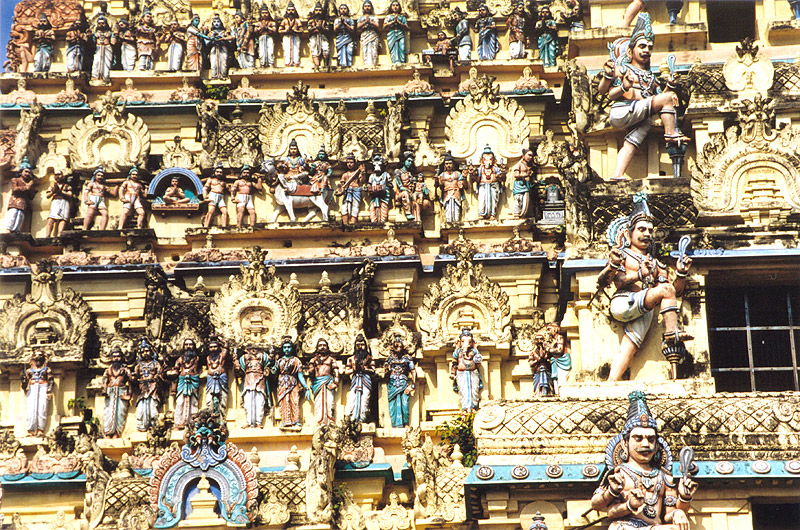
Finest temple architecture and
sculpture.
The famous Ardhra Darshan takes place
here every December. Aani Thirumanjanam (Holy Bathing during the
Tamil month of Aani) and Natyanjali festival for Bharatanatyam is
celebrated with enthusiasm.
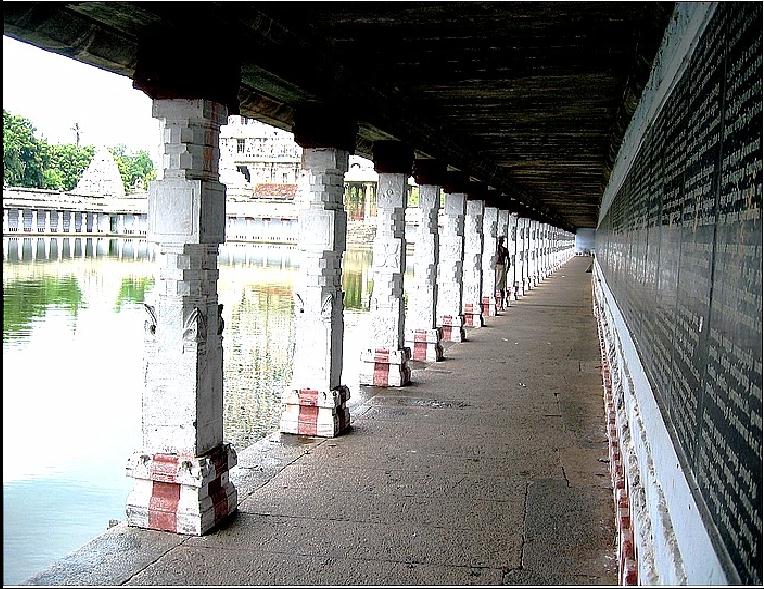
There are 10 Theerthams (water tanks)
namley, Shivaganga Theertham, Paramananda Khoobam, Vyagrapatha
theertham, Anantha theertham, Nakacheri, Brahma Theertham,
Shivapriyay, Pulimedu theertham, Kuyya theertham, Thirupparkadal
etc.
Chidambara Rahasyam - In Chithsabha,
Lord Shiva in his manifestation of formlessness is worshipped.
The Lord is said to continuously dance His Dance of Ever-lasting
Bliss - "Ananda Thandava", with His consort Shakthi or Energy called
'Shivagami'. He is diagrammatically represented by a 'Yantra'
on the wall of an empty space in the Sanctum Sanctorum of the
temple. A curtain covers this space on the right hand side of
Chithsabha, which when drawn reveals strands of golden "Bilva"
leaves hung to indicate the Lord's presence. The curtain is dark in
the exterior - indicating ignorance and bright red in the interior -
indicating wisdom and bliss.
There are five Sabhas or daises or halls
in the temple, they are :-
1) Chithsabha - This
houses Lord Nataraja His Consort Goddess Shivagamasundari
2) Kanakasabha - which is in front of the Chitsabhai, from
where the daily rituals are conducted.
3) Natyasabha - Itis at the South side of the flag mast (Kodimaram
or dwajasthambam) where the Lord is said to have
danced with 'Kaali" - an embodiment of energy and showed His
exemplary dancing skills.
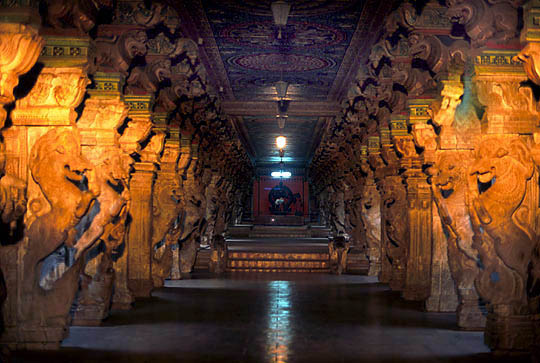
4) Rajasabha - It is also called 1000 pillared hall
symbolizing the yogic chakra of thousand pillared lotus. This
chakra is
represented as a 1000 petalled lotus. Meditating by
concentrating at the Sahasra Chakra is said to
merged with the 'oneness' of God and is done through severe austerities.
5) Devasabha - Houses the Panchamoorthis (five
moorthis - i.e. deities, namely deties of Lord as Ganesh, Lord
Somaskander (form where Lord is in seated position with His
Grance and Consort and Lord Subramanya
in the middle).
The temple is surrounded
by huge walls with five big Gopurams or the Tower and a Big tank
called Shivaganga tank measuring 175x100 feet in the North.
The North Gopuram is the oldest and North and South Gopurams are 160
feet high. The 108 dance postures are sculpted in adherence to
Natya Sastra in these towers. It has five principal Sabhas or
Stages such as Kanakasabha, Chit Sabha, Nirtya Sabha, Deva Sabha and
Raja Sabha. The Lord of the Universes is enshrined in Chit
Sabha.
The temple is regularly maintained and
every 12 years in general major repairs and renovation works are
carried out and consecration takes place. This temple dedicated to
Nataraja blends piety, tradition, history and art to an outstanding
level. The art and architectural lavished on the temple is
just remarkable.
The Nritya Sabha, which is richly sculpted
in the form of a chariot drawn by horses houses the images of Nataraja in
Urdhava Tandava pose, image of Sarabheswara.
The Deva Sabha is a spacious hall meant for
the celebration of important festivals and houses the festival images of the
Pancha Murtis (Somaskandar, Parvati, Vinayaka, Subramanya and Chandikeswara) and
other deities.
The Raja sabha measuring 103 metres by 58
metres is housed in a 1000 pillared hall in the outermost prakaram. Tradition
holds that Sekhizhar recited the Peria Puranam here.
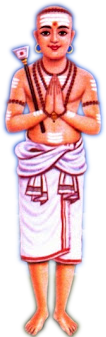
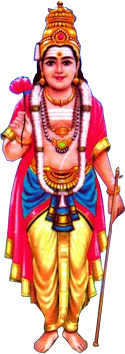
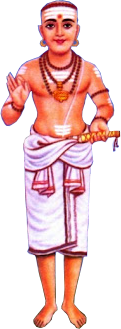
The images of the Shaiva saints Appar,
Sambandar, Sundarar and Manikkavachakar are placed in the temple entrances
through which they entered the temple (Appar - West, Sambandar - South,
Sundarar - North and Manikkavachakar - East).
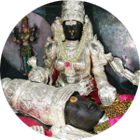
The shrine for Govindaraja Perumal and
serves as unity of Vaishnavism and Shaivsm, it is said that Lord
Vishnu, in reclining posture, watches the beauty of Shiva dancing in
Ananda Thaandava. The Vinayaka idol blowing a conch.
The huge Ganesha in the outer prakara considered to be one of the biggest in
India.
The temple of Shivakami as Goddess Parvathi in the outer prakara, with its beautiful architecture with sculptural
beauties.
Lord Subramania temple next to the Goddess temple.
Durga temple adjacent to this.
The embossed images of the Saints
Vyagrapada and Patanjali are carved in the doors. Both these
saints were blessed with the sight of the rare cosmic dance of
Shiva. Lord Vishnu too is said to have witnessed this scene.
The images of Ratnasabhapathi (Nataraja of Ruby), the Spatika Linga
of Chandramuleeswara, Swarnakarshana Bhairava, Mukhalingam are found
in Chitsabha. In the Kanaka Sabha (Golden Hall) lying adjacent
to Chit Sabha, poojas are offered.
The nine gateways indicate the nine
orifices in human structure. The Chitsabha at the sanctum
sanctorum represents the heart and Chidamabaram is considered the
heart of universe. There is a five silver steps leading to God's
abode signifying Si VA Ya Na Ma in Kanakasabha. The access to
the Sabha is through the sides of the stage, there are 28 pillars in
the Ponnambalam or the Golden Hall - indicating 28 Agamas or set of
worship of Lord Shiva. The roof is held by a set of 64 beams
representing the 64 forms of art and is held by several cross beams
meaning innumerable blood vessels. The roof has been laid by
21,600 golden tiles with the word SIVAYANAMA inscribed on them
representing 21600 breaths. The roof is topped by a set of
nine sacred pots of copper (Kalasams) this represents nine forms of
energy. Consecration is commemorated once in 12 years,
signifying the change of ingredients inside the copper pots (this is
said to contain thunderstorm).
The temple car of Chidambaram is one of
the finest art piece and example of temple car making. This is
drawn twice a year by several devotees during festivities one on
Aani (July) and during Ardhra Darshan - during December.
RULERS' CONTRIBUTIONS
The old rulers had patronized the
temples and it was always their agenda to build, expand and
maintain. We derive lot of inferences from literature and
poetry, copper plate sculptors as to their enormous contribution.
We learn from Sangam literature that erstwhile Cholas were great
devotees of this ancient temple, took pride in boasting
contributions, the Dikshitars (temple priests) had the right to
perform 'Pattabhishekam' to Cholas.
We also notice from inscriptions that
the great Chola King Kochengan was born after his father king
Subhadevan and Kamaladevi worshipped in Thillai (chidambaram) golden
hall. Thiss hows that the temple existed thousands of years
before Christ. Pallava Kings, Simmavarman made significant
contributions to the upkeep of temple. The temple architecture -
particularly of the sanctum sanctorum and its roof does not adhere
to any of the other temples architecture of Cholas, Pandyas or
Pallavas. This has, to some extent, certain similarities with
the Cheras, but Cheras came to be known only after the 12th Century
AD.
DYNASTIES's CONTRIBTUIONS....
Rajaraja Chola (985-1014 AD), who gave
the masterpiece of Big Temple in Tanjore, Rajendra Cholan - who
duplicated similar temple in Gangaikonda Cholapuram (1012-1044 AD),
Kulothunga Cholan I (1070-1120), Vikrama Chola I (1070-1120 AD,
Vikrama Chola 1118-1135 AD, Rajathiraja Chola 1178-1218, Rajararaja
II (1216-1256AD). Cholas contributed golden tiles to the roof
of Chitsabha by Paranthaka I and significance contributions have
been given by Rajaraja, Kundavai, Vikrama Chola.
Pandya Kings :
Thribhuvanachakravarthi Veerapandiyathevan, Jatavarman
Thribhunvanavakravarthi Sundarapandiyan (1251-1268 AD), Maravarman
Kulasekarathevan 1268-1308 AD). They constructed the South Gopuram,
as evidenced from sculpture work of Fish emblem on the ceiling.
Jadavarman Pandyan constructed the West Gopuram.
Pallava Kings - Alapiranthan
Kopperunjingathevan (1216-1242AD). He has renovated the South
Gopuram after it was originally done by Pandyas. This is named
after him "Kopperunjingan seven tier gopuram". The East
Gopuram was the first to be constructed by Second Kopperunjingan and
subsequently repaired by philanthropist Pachaiappa Mudaliar and his
wife Iyalammal. There is a trust under his name even today to
take care of varieties of rituals and maintenance of teple car.
Viajayanagara Kings:
Krishna Devaraya 1509-1529 AD, Veerapradhaba Venkata Devakaraya,
Sriranga Devamakaraya, Achuthdha Devamakaraya (1529-1542AD),
Veerabhoopathirayar. The North Gopuram was constructed by
Vijayanagara King.
Cheras : Descendants of Cheramaan
Perumal Nayanar Ramavarma Maharaja.
Besides the above rich donations have
been extended by various Kings, Rules, Patrons, Philanthropist,
Religious personalities to the temple. It is said Maharaja of
Pudukottai Shri. Sethupathy had given Emerald jewel which is still
adored at the deity.
LORD VISHNU
Inside the Chidambaram temple complex
there is shrine dedicated to Govindaraja Perumal and Pundareegavalli
Thaayar (Mahalakshmi). This is one of the 108 Divya Kshethram
or important Abodes of God Vishnu sanctified by Alwars (Servitors of
Lord Vishnu) and sung by holy hymns of Nalayara Divyaprabhandam).
Devotees can worship both Lord Vishnu and Lord Nataraja standing at
one point.
CHIDAMBARA RAHASYAM
As Lord Shiva is the
manifestation of both formless and form and He is worshipped in
these forms here, it is believed the Lord is dancing continuously
with His special "Ananda Thaandava" with His Consort Shivagami and
is represented by a Yantra on the wall of an empty space in the
Sanctum Sanctorum of the temple. There is a black screen,
which is considered to cover Akasha Lingam (actually there is no
Lingam but we are made to believe that there is an invisible Lingam,
reeals strands of golden Bilva leaves hung to indicate Lord's
presence. This indicate that there is everything in nothing.
VYAGRAPATHA
was blessed by the Lord and granted with long nails and power to
see through darkness like Tiger.
The magic and overcoming of ignorance
A group of
Saints resided in the Thillai forests who believed in the supremacy of magic and
GOD can be reached by invoking sheer rituals or through vibrations of
'mantra'. The Lord strolls around the forest, radiating brilliance and
beauty, assumed the form of 'Pitchandanar', a nude mendicant seeking alms.
The Rishis and their wives are mesmarized by the brilliance and beauty of the
handsome mendicant and His Consort. On seeing their wives fall prey to His
brilliance, they invoke scores of serpents through magic, the Lord, under the
guise of mendicant, lifts the serpents and dons them as ornaments on His matted
locks, neck, waist, ear-rings. The Rishis, driven to the corner, invoke a fierce
tiger, which the Lord at once wear it around His waist. Having defeated
and dethroned of victory, they invoke a powerful demon "Muyalakan' a symbol of
complete arrogance and ignorance (He can be spotted under the Foot of Sri
Nataraja). Sporting a gentle smile, steps on the back of demon, stuns him
and performs the Dance of Bliss (Ananda Thaandava), later Rishis surrender to
Him, understands the real power of GOD.
Vyagrapatha Muni and Patanjali
Another Legend
says the Great Maharshi Vashista's relative Madhyanthi Muni was blessed with a
son named Maadhyanthi. He was advised to go Thillai (Chidambaram) forest and
worship the Swayambu (self-raised) Shivalingam when he sought to unearth mystery
of world and self-realization. He came to Thillai forest and begun to
perform daily worship of the Lord there.
He faced a
unique dilemma. He used to pluck flowers before dawn and felt that plucking
flowers after sunrise delays his daily pooja routine and bees draw nectar from
flowers, thus making the flowers unsuitable for Lord's submission. He
continued his routine despite the lingering ache. He Prayed to the Lord with his grievances saying, "Oh Lord, I am not able to pluck flowers before dawn as I am
not able to see, neither I am able to pluck after the dawn as it becomes
unsuitable for pooja". He was instantly blessed by the Lord with the power of
eyes wherein he can see in dark and able to climb up the tree (like the Tiger).
Hence, he came to be called as Vyaagrapatha (Vyaagra - Tiger, Paatha = Foot) or
"Pulikkal Muni" in Tamil. He was very much happy and continued his pooja,
according to Sthala Purana.
The
Ananda Thaandava (Dance of Bliss)
Adhisesha,
the serpent who serves as a bed for the Lord, in his manifestation as Vishnu,
yearns to see. The Lord blesses Him, beckons him to assume the saintly
form of 'Patanjalai Maharshi' an sends him to the Thillai forest, informing him
that He will display the dance in due course. Patanjali reaches Thillai
forest, performs poojas and after severe austerities, he is joined with another
saitn, Vyagrapathar and Lord Nataraja dances to their sight and it is believed
that this Dance took place during Jan-Feb - Tamil day of Pushya star.
Dikshithars - The Priests-cum-administrators of this temple
The oldest
hierarchy of Brahmin priests who administer the temple upkeep and rituals are
called Dikshitars; they are unique different from other Tamil
Brahmins, they are considered to descend from oldest Pancha-Dravida-Brahmins (Choliyas).
They were originally 3000 as we derive inferences from historical records; 'Thillai
Moovayiram' (in Tamil). They believe three thousands were
appointed to take care of the temple and take pride in boasting descendants of
Sri Patanjali Muni the writer of Yoga Sutra, Natyasashtra and Vyagrapatha Muni.
It is
commonly believed that there were only 2999 and Lord Shiva Himself is 3000th.
This is the reason that they take the share from the temple income and run their
families as they feel Lord Shiva is one among them and generally, it is a taboo
to use Lord Shiva's assets/income. They consider themselves as Slaves of Lord
Nataraja, the keepers, guardians, the devotees and worshippers; even when the
sanctum is closed they keep chanting Mantras sitting outside the door. They
never part Him.
It is also
recorded that their numbers dwindled to today's 300 due to invasion and many
said to have sacrificed. They divide their duties among themselves and all take
turn and discharge responsibilities in small groups, it ranges from performing
rituals at the sanctum sanctorum, chanting of VEDAS, ringing bells, lighting
lamps, carrying offerings, cleaning etc. Only married man can be a
Dikshitar. Every married man has a share in the temple income and the
temple is run by donations and funds from philanthropists. This prompts them to
enter into child marriages among them. They do not marry outside the clan. In
the past temple income dwindled to a great extent, however, Dikshitars
have gone without food but not compromised on the daily routine expenditure of
their beloved Lord. Well-being of the Lord is utmost important for them
than their own. Sundarar - the great servitor of Lord Shiva, in
his poem Thiruthondarthogai (Cluster of Shiva's Slaves)
pays tribute to the priests. Besides Sundarar, Saints ThirugnyAna
Sampanthar, Appar (Thirunavukkarasar), Manicka Vachagar and other Nayanmars,
Vaishnavite Alwars (Saints) paid rich praise on them.
Chidambaram
is located 250 kms of Chennai,
near Kollidam River, on the Chennai-Mayiladuthurai road. It is
1.5 hours from Cuddalore and 2 hours from Pondicherry.
There
are six poojas performed in a day at the sanctum sanctorum, six
abhishekams are (anointing) performed for Lord Nataraya in a year.
The main important and primary festival is Aardhra Darshan
(December-January) indicating the first pooja during 14th day after
the new moon (Chaturdasi) of the month of Masi (February-March)
indicating the second pooja, the Chittirai Shravanam (April-May) the
third pooja at the middle of the day, the Uthiram (Uthraproshtaprada),
famously called Aani Thirumanjanam refers to the evening or the fourth
pooja, the Chaturdasi of Avani (August-Sept) refers to the fifth the
pooja and the Charturdasi of the month of Purattasi (Oct.Nov.)
refers to the sixth pooja or Arthajama pooja.
Unlike other temples where there are two Murthis, one in Sanctum and
another for procession, here both Processional Deity and the Moolavar
(Sanctum) are one.
Morning 6.00 am temple opens,
Paduka Pooja of Lord
Nataraja followed by Cow (Go) Pooja.
Second and third Pooja is performed at 9.00 am and
Temple closes after the third Pooja at 12.00 noon.
Evening 4.30 pm
temple opens.
4th Pooja is performed at 6.00 pm
5th Pooja is performed at 8.00 pm
6th Pooja is performed at 10.00 pm and Paduka
(Footwear) of Lord Nataraja is taken in a
palanquin to Palliyarai (retiring room)
Before the 5th Pooja at night, the
Priest in-charge of the day performs special rituals at the
Chidambara Rahaysa, where he anoints the Yantra with aromatic
substances and offers Neivedhyam. It is believed that after
the Arthajama Pooja, the entire universal activities come to an
end and retires into the Lord, when he retires for the night.
Note:
Since this Temple is maintained solely by the Dikshitars
(Priests)
there is no dedicated temple office. Those who wants to
perform pooja or take
a tour of the temple premises may please contact the following
Dikshitar who will
be pleased to assist you in conducting pooja at the temple.
(Please refer to them you are from Pradosham)
Shri. R.Thangaraj Dikshithar
136/55, East Car Street, Chidambaram 608 001
Landline: 04144-223507, Mobile: +9442391219
email:
pratibha2k2005@yahoo.co.in