

|
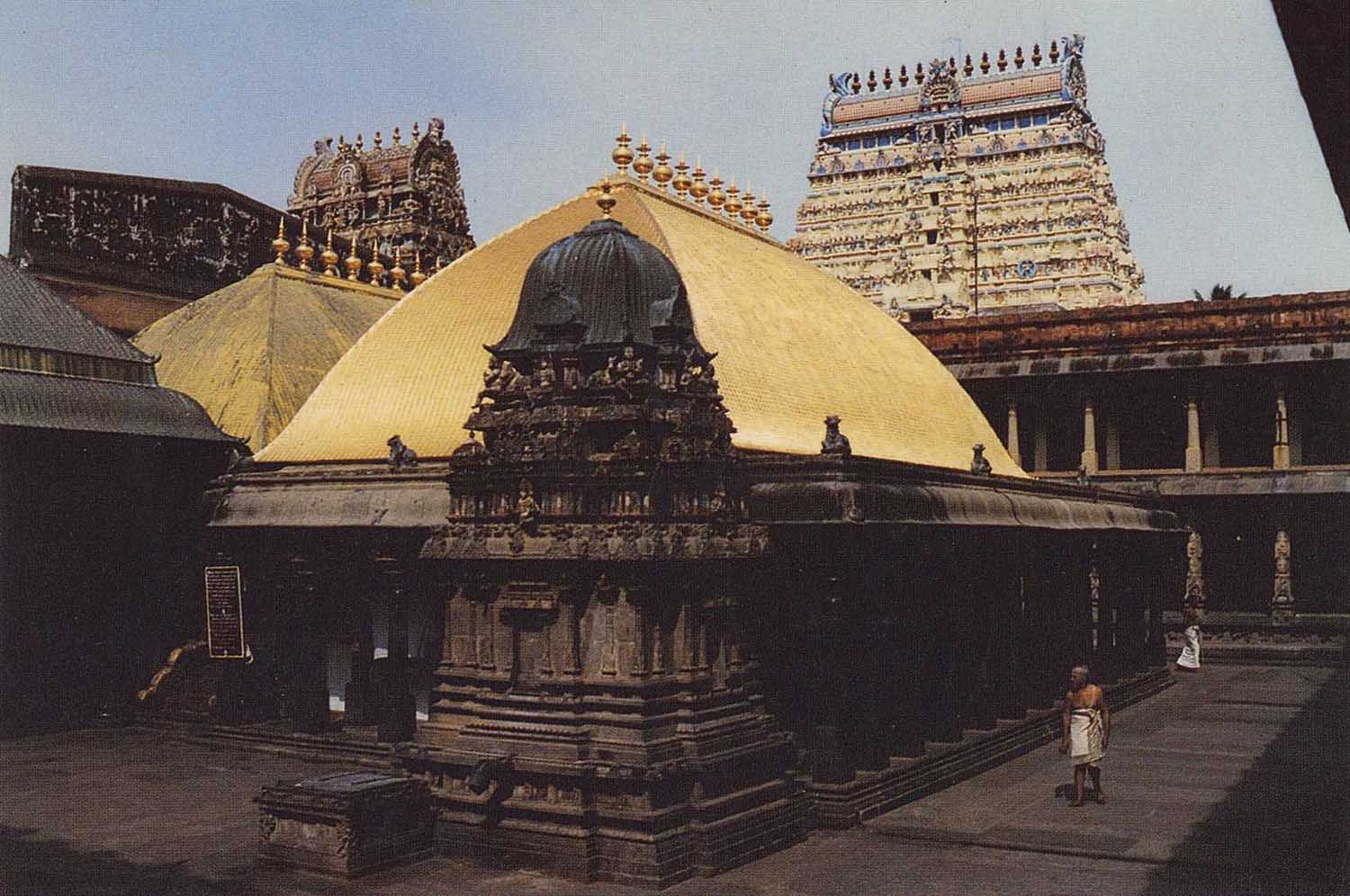
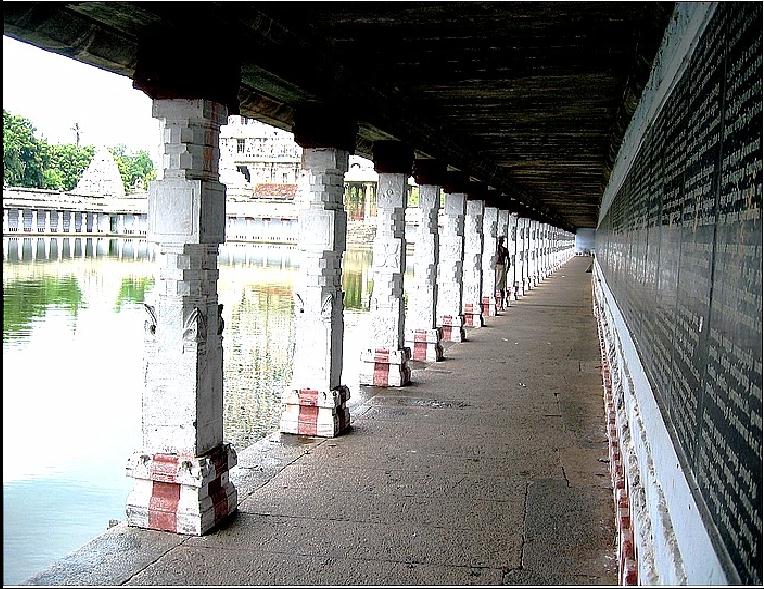
Alive and Vibrant The Veda Padasala's mission is to sensitise the sons of Sivachariars to the significance of learning Vedas in their original form, writes T.SARAVANAN, Thanks to THE HINDU WHOEVER SAYS Sanskrit is a dying language will have to recant after a visit to the Sri Subramania Swamy Temple in Tirupparankundram. As one approaches `Lakshmi Theertham', vedic chants by children rent the air. The atmosphere feels vibrantly alive with chorus rendering of vedic hymns filling the ears. It is a sight to see young boys sporting spotless white dhotis with saffron towel tied around their waist and hair lying in a knot on the head moving around inside this little known Veda padasala (school). One is told the young students are doing `avarthi'— that is revising their lessons on vedic hymns. As the chants grow louder, one can sense a rhythm in the rendition, which is a pure delight. The only institution of its kind in the southern districts, the Veda padasala was started with the intention of sensitising the sons of Sivachariars to the significance of learning Vedas and hymns in their original form and the importance of `parayanam' (recitals). The boys had to be trained so that they could take over the mantle from their fathers. "The need to start such a residential school was felt given the dearth of quality priests in temples," according to Chandrasekara alias Raja Bhattar, the founder of the padasala. After finishing a six-year Vedic course at the Kanchi Kamakoti Mutt Veda Sivagama Padasala in Alloor Village in Tiruchi in 1982, he joined his father at the Tirupparankundram Temple. "It was from that day itself that I felt the need for such a school in the Temple City," he says. The school was finally started in 1993 in commemoration of the centenary celebrations of the Sri Chandrasekarendra Swamigal of Kanchi Kamakoti Peetam. Justifiably, the school was named Sri Kanchi Maha Swamigal Sathapthi Veda Sivagama Padasala Trust. But when Mr.Raja Bhattar started scouting for a suitable place to set up the residential school, he found no place to his liking and settled for the top floor of his house. And so, from under the thatched roof began his mission. Soon he found patrons in the form of Madurai Velliambalam Tirupparankundram Odukkam Trust who offered free of cost a hall inside the temple. At present, the classes are conducted in this same hall. It didn't take long for other patrons to follow suit. The Managing Director of Thiagarajar Mills, Mr.Karumuttu Kannan, among others came forward to lend a helping hand. As the school grew in size and reputation, entrance exam had to be conducted for admission of boys aged between 11-19 years. The minimum qualification required to join the veda padasala is a basic knowledge of reading and writing Sanskrit, the ability to recite `Gayathri Jebam', and the father of the student should be a priest in any of the temple. There is no boarding fee for the students and the uniform and basic medical services are also provided free of cost to the inmates of this unique residential school. The application forms for the entrance exam are generally distributed in the month of `Avani'. "Though we have put down certain rules to conduct the course, a student should have an aptitude to learn Sanskrit. If a candidate is deserving enough, we even relax the rules,'' says Mr.Raja Bhattar. The age for entering the veda padasala has been kept at 11 years because the memory power of young boys is stated to be the highest during this period. While the upper age limit has been fixed at 19 because the understanding capacity of boys reaches the optimum level by then. A student's progress is evaluated every three months and at the end of one year, annual examinations are conducted. No leniency is shown while promoting or demoting a student. The accent of the syllabi for the five-year-course is on Yajur Veda, as it deals in detail about yagnas and the procedures. Besides, the course also concentrates on other Vedas, agamas with 131 Dhyanams based on the `swaroopams' (physical structure) of Gods and Goddess, Nithya pujas, Uthsavams and the salient features of temple renovation, construction and kumbabishekams. In the first year, students are familiarised with as many as 150 Roopa Dhyanas of Gods, the Prathashsmaranam and Panchakavya puja. In the second year the measurements of the temple are taught. In the remaining three years the students are taught about the methods of kumbabishekam and recitation of `Panniruthirumurai' and also given practical training. "The syllabus has been prepared in such a way that the boys can carry out the job of a temple priest commendably plus they have the advantage of possessing a professional qualification," says Mr.Raja Bhattar. The day at the padasala for the young boys begins at 5 a.m. when they do `Prathashsmaranam' for 15 minutes. This is followed by the recitation of `Gayathri Jebam' till 6.30 a.m. The next hour is devoted to chanting of prayers in the temple. Breakfast time is from 7.30 a.m. to 9 a.m. followed by Sivagama classes upto noon. The slot up to 2 p.m. is reserved for 'Gayathri Jebam' and meals. From 2 to 4.30 p.m. veda classes are conducted again followed by an hour's `Gayathri Jebam'. At 5.30 p.m. the boys go to the temple for prayers. And the last hour before calling it a day at 8.30 p.m. they learn Sanskrit grammar and attend thirumurai and samaya classes. "The last working hour at school changes every three days. The first three days the boys attend `Thirumurai' classes where `Thevaram', `Thiruvasagam' are taught. The next three days Sanskrit grammar is taught and on the seventh day the students attend `samaya' class where they are familiarised with religious stories, about 61 nayanmars and about `Saivisim'," Mr.Raja Bhattar details the schedule. The children are allowed a few holidays on `Prathamai', `Ashtami', `Sathurthasi', new moon and full moon days when no classes are conducted. On these days, only revision of lessons is done and students are sent to some temple functions where they perform pujas for practical training. For the course, the students are given both the `Nagaram' (Devanagari script) and `Grandham' (which resembles ancient Tamil inscriptions) scripts of Sanskrit to recite. "They are asked to recite every lesson 10 times a day," Mr.Raja Bhattar shares. The diet for the students is also carefully decided. Breakfast consists of `pazhayasatham' (overnight cooked rice soaked in water) and pickle. "The students need to go in full throttle while reciting hymns which may result in ulcer complaints. This breakfast will keep the throat and stomach in perfect condition," he reveals. Lunch and dinner is the usual South Indian fare with vegetable curry, `sambar', `rasam' and `butter milk'. Mr.Raja Bhattar informs with pride that most of his students have done well for themselves ever since the school started a decade ago. Many of his illustrious students have become head priests in different temples of various countries including England, Malaysia and Singapore. Several of their students are performing pujas in temples all over Tamil Nadu. Each day two students from the veda padasala visit the Sri Meenakshi Sundareswarar Temple with the holy water and do Veda parayanam. During `pradosham' these children go around all the praharams of the temple and recite Vedic hymns. Apart from conducting Vedic classes, the school has also started `Nathaswaram and Tavil' classes conducted by A.P.Raja, Asthana Vidwan of Tirupparankundram Temple. "The first batch of the school passes out this year. The rules and regulations are almost same for admission. During the first year we test the knowledge of `shruti' and `layam' of the student, in the remaining three years we concentrate on `alangaram', `geetham', `varnam' and `keerthanas'," says Mr.Raja. For Raja Bhattar, running a Veda padasala is as sacred as job as a temple priest. He feels it is his responsibility to bring more learned and qualified priests for doing pujas inside the Sanctum Santorum. "There have been occasions when I have struggled to conduct even the daily proceedings at the school given the shortage of funds. During those times, I did not hesitate to mortgage my family jewels to prevent disruption in the course programme. Now, the situation has improved given the benevolence of our patrons. But still we are in need of more to be able to accommodate many more interested students," feels Mr.Raja Bhattar. From a modest beginning with just seven students, the school today has an alumni of 160 students from not only Tamil Nadu but even neighbouring States. The
veda padasala has definitely grown in stature but is still shy of publicity. OUR DUTY TO KEEP ALIVE THE SPARK Humble request to protect the shining jewel of Sanadhana Dharma "The Vedas are eternal and the source of all creations and their greatness is to be known in many different ways. As I have already stated, their sound produces in our nadis as well as in the atmosphere vibrations that are salutary not only to our own Self but to the entire world. Here we must understand "lokakshema" or our welfare of the world to mean the good of mankind as well as of all other creatures. This concern for all creation that finds expression in the Vedas is not shared by any other religion. "Sanno astu dvipadesancatuspade"-- this occurs in a mantra : the Vedas pray for the good of all creatures including bipeds, quadrupeds etc. Even grass, shrubs, trees, mountains and the rivers are not excluded from their benign purview. The happy state of all these sentient creatures and inert objects is brought about through the special quality of the Vedas. The noble character of their sound apart, the Vedas are also notable for the lofty truths that find expression in the mantras. The tenets of these scriptures have aroused the wonder of the people of other lands, of other faiths. They are moved by the poetic beauty of the hymns, the subtle manner in which principles of social life are dealt with them, the metaphysical truths embedded and expounded in them, and the moral instruction as well as scientific truths contained in them. The remarkable thing about the Vedas is that they are of immeasurable value as much for their sound as for their verbal content. while the sound has its creative power, the words are notable for the exalted character of the meaning they convey". It must here be emphasised that on the doctrinal level the Vedas deal both with worldly life and the inner life of the Self. They teach how to conduct ourselves in such a manner as to create Atmic well-being. And their concern is not with the liberation of the individual alone; they speak about the ideals of social life and about the duties of the public. How the Brahmin ought to lead his life and how the king must rule his subjects and what ideals women are to follow: an answer to these-stated in the form of laws-is to be found in these scriptures. The Vedas indeed constitute the apex of our law-books" PARAMACHARYA. We have seen in recent times, the decline of VEDAS due to various reasons beyond our control. In order to protect the hoary scripture and the shining treasure of Hinduism, we request you, within your limit, to contribute generously to keep the VEDA PATASALA maintained. You can send money directly to any VEDA Patasala of your knowledge. In case you do not find a one, we give hereunder one such Patasala, for your easy reference, where VEDAS are taught to young poor children, this Trust is a well-known Patasala in South India.
Shri
Pitchai Gurukkal (Chief Priest), Draft may be taken in favor of "Sivaneri Kazhakam Trust" A/c No. 1777 - Indian Bank, Pillayarpatti.Similarly, you can also send to Sringeri Math or Kanchi Math or any other Trusts within your reach.
|